Helping young athletes recover, grow and perform.
We help parents navigate youth sports injuries, from understanding what is happening to their growing body, through rebuilding a stronger, more resilient one, to a confident return to sport. Physiotherapy, strength and conditioning and youth athlete development in one place.

The NextGEN framework
Recover, Grow, Perform: three stages from painful to playing.
Every guide, framework and check-in follows the same three stages, so you always know what you are working on and what comes next.
Recover
Load & Pain Management
Understand the problem and get symptoms to a manageable level.
- Understanding what the symptoms are telling you
- Monitoring pain day to day and after activity
- Modifying the parts of training that flare things up
- Awareness of total training load across clubs, school and sport
- Maintaining appropriate strength rather than stopping everything
- Avoiding unnecessary complete rest where that is appropriate
- Setting a manageable baseline to build from
Grow
Build Impact Tolerance
Rebuild strength and the ability to tolerate impact again.
- Progressive strength work for the affected area and the whole body
- Building tendon and muscle capacity over time
- Gradual exposure to impact
- Hopping and jumping progressions where appropriate
- Running progression where appropriate
- Increasing tolerance to training, not just to exercises
Perform
Rebuild Sports Capacity
Rebuild the qualities their sport actually asks for.
- Running and sprinting capacity
- Jumping, landing and change of direction
- Sport-specific loading and drills
- Progressing training volume sensibly
- Considerations for returning to full training
- Considerations for returning to competition
Progress through the stages is guided by symptoms, capacity and the individual young athlete, not by the number of weeks completed. Some move faster, some need longer in a stage, and that is normal.
How it works
Three steps, whenever you need them.
Start with the free guide. Move on only if and when you want more structure or more support.
Step 1
Free
Read the parent guide
Understand what is happening to your child, what makes it worse, when assessment is appropriate, and how the three-stage framework works. Written by a physio, for parents.
Understand it
Get the free guideStep 2
£59
6-Week Recovery Framework
A condition-specific framework you follow at home: phase-by-phase structure, load and pain guidance, progression criteria, impact and sport-capacity progressions, and exercise demonstrations.
Load & Pain, Impact Tolerance
See plansStep 3
£395
12-week personalised rehab
The same three stages, built around your athlete after a 1:1 video assessment, with bi-weekly physio check-ins, changes as they progress, and return-to-sport screening.
All three stages, with support
See plansStart here
What is causing your child's pain?
Pick what sounds most like them for a plain-English explanation and a free guide.
8–14 years
Sever's Disease
Heel pain in active children caused by inflammation of the growth plate at the back of the heel.
Learn more10–15 years
Osgood–Schlatter Disease
Painful bump just below the kneecap caused by traction on the growing shin bone.
Learn more10–14 years
Sinding-Larsen–Johansson
Pain at the bottom of the kneecap where the patellar tendon attaches, a cousin of Osgood–Schlatter.
Learn more11–16 years
Growth-Related Back Pain
Lower back pain in young athletes linked to rapid growth, tight hips and high training loads.
Learn more12–17 years
Adolescent Patellofemoral Pain
Pain around or behind the kneecap in active teenagers - a load and control problem, not a growth-plate injury.
Learn more
Step 2 · Self-guided
6-Week Recovery Framework
Where most parents go after the free guide. A condition-specific framework with phases, load and pain guidance, progression criteria and demonstrations, so you have a clear structure to work through at home.
Load & Pain Management, Impact Tolerance
£59
includes 20% VAT
Explore the framework
Step 3 · Personalised
12-Week Personalised Rehab
The same three stages, built around your athlete after a 1:1 video assessment, with bi-weekly physio check-ins, changes as they progress and return-to-sport screening.
All three stages, with physio support
£395
£495 launch price
See what is includedNot sure which one? Compare both side by side.
Parent resources
Clear, jargon-free guides that answer the questions every sports parent asks, what's normal, what to watch for, and exactly what to do this week.
Get the free guides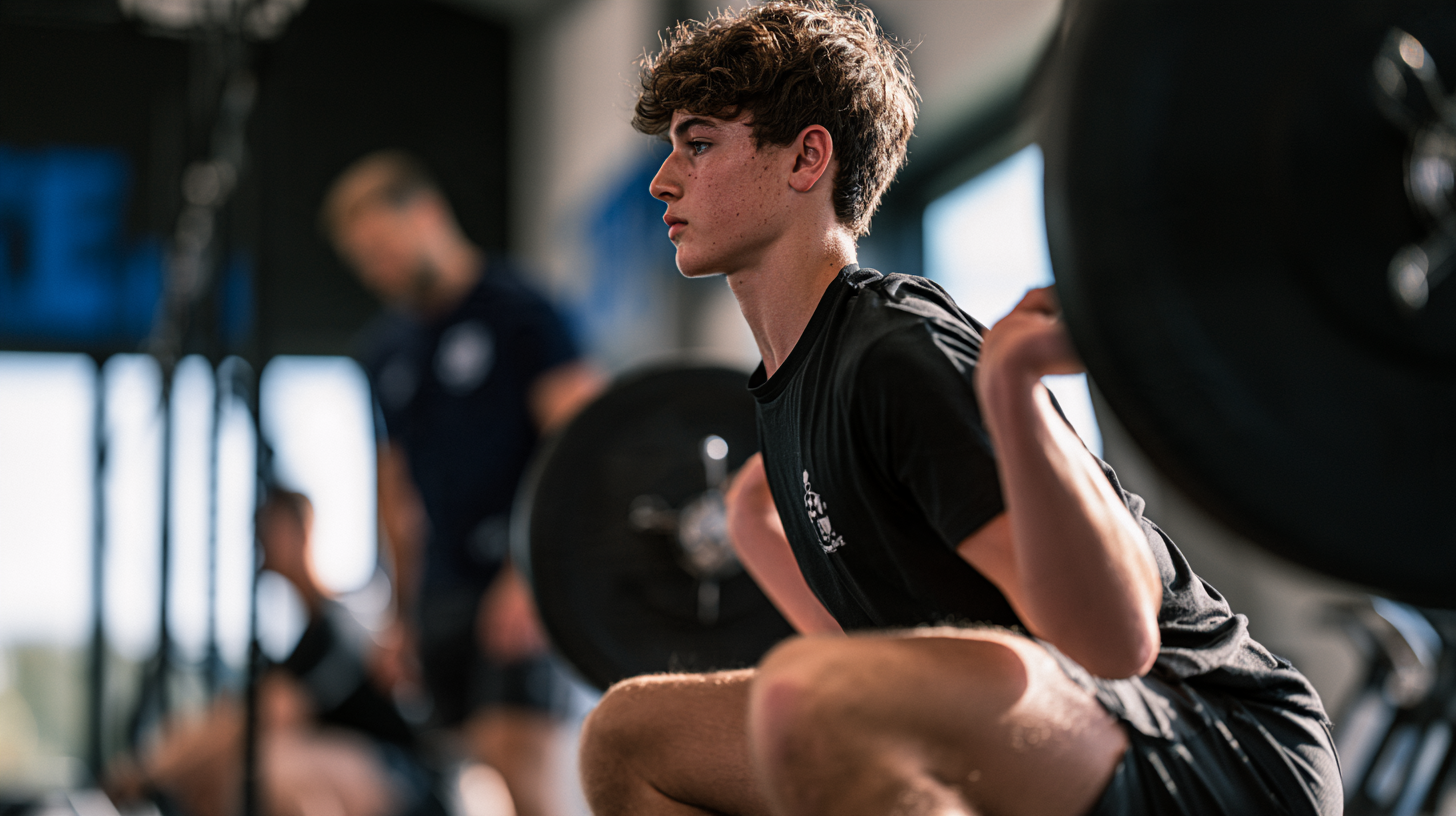
Online education
Video demos, load-management explainers and return-to-sport frameworks, built for athletes, parents and coaches to learn together.
Explore the evidence hubFor parents
Questions parents ask us.
Honest answers to the things that keep sports parents up at night. If your question isn't here, get in touch and ask.
Is this just growing pains? Should I be worried?
Pain during a growth spurt is common and usually manageable, but "growing pains" is not a plan. Most growth-related pain settles well when training load is adjusted and strength work is added. What matters is knowing which pattern you are dealing with, and watching for the warning signs that need a face-to-face assessment.
Can they still play?
Often, in some form. Complete rest tends to settle pain for a week or two and then it returns, because nothing has been built in the meantime. Most young athletes do better reducing the parts of training that flare things up, keeping what they tolerate, and adding strength work alongside.
How much is too much?
Look at the whole week, not one session: club, school, matches and any extra training. Pain that settles quickly and does not carry into the next day usually means the load was manageable. Pain that lingers the following morning is the signal to pull the load back a little.
How long will this take?
It depends on the condition, how long it has been going on and how much they play. Growth-related pain often takes six to twelve weeks of consistent work to settle and rebuild capacity. Anyone promising a fixed timeline is guessing.
Is strength training safe at their age?
Yes, when it is coached and progressed properly. Well-supervised resistance training in young athletes is supported by the research and is one of the better things you can do for their long-term health and injury risk. It is the loading spikes and lack of strength that tend to cause problems, not the strength work itself.
How do we know when to progress?
By what their body is doing, not by the calendar. Each stage of the framework has criteria: symptoms behaving predictably, strength work being tolerated, then impact and running being tolerated. If a stage still feels hard, staying there longer is the right call.
Do we need a scan?
Most growth-related pain is diagnosed from the story and a physical assessment, not imaging, and scans in young athletes often show normal changes that can worry families unnecessarily. Imaging is useful when specific red flags are present, and that is a decision for the clinician assessing them.
What if the pain keeps coming back every season?
Recurring pain usually means the underlying capacity was never rebuilt, or training load climbs faster than their body adapts. That is the gap the strength, impact and sport-capacity work is designed to close.
When do we need to see someone in person?
See a clinician in person if there was a significant injury or trauma, if they cannot weight bear, if there is night pain, unexplained weight loss, fever, or swelling and heat around a joint, if pain is getting steadily worse, or if you are simply worried. Our content and frameworks are education and exercise support, not a diagnosis.
What is the difference between the free guide and the £59 framework?
The free guide helps you understand the condition: what it is, why it happens, what makes it worse, when to get them assessed, and how our three stages work. The £59 framework gives you the structure: a six-week format with phases, load and pain guidance, progression criteria, impact and sport-capacity progressions, demonstrations and checklists.
What do we get for £59 versus £395?
The £59 recovery framework is condition-specific and the same for everyone who buys it, and you work through it yourselves. The £395 option is twelve weeks built around your athlete after a 1:1 video assessment, with bi-weekly physio check-ins, changes as they progress, message access, the exercise video library and return-to-sport screening.
Do I have to be sporty or know the exercises?
No. Everything is written for parents, with coaching points, sets, reps and video demonstrations. Your job is to help them stay consistent, not to coach it perfectly.
Ready to help them work back to full speed?
Start with the condition-specific 6-Week Recovery Framework, written by a specialist youth physiotherapist, and work through it stage by stage at home.
See the recovery frameworks